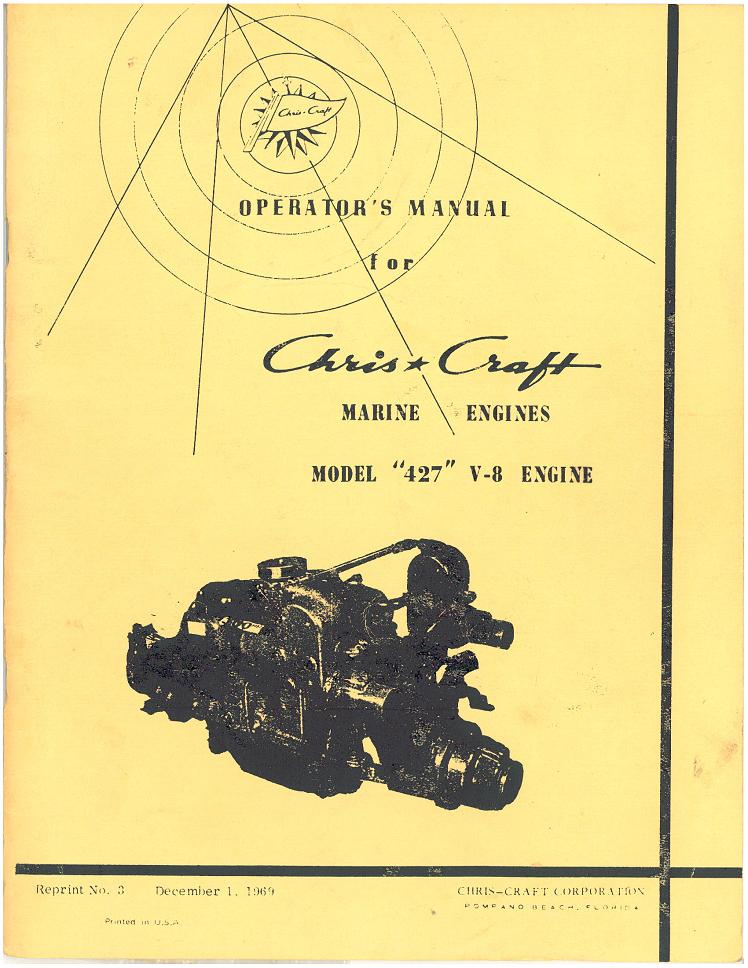
CHRIS CRAFT COMMANDER FORUM ® .......A photo-intensive technical reference file and ongoing newsletter regarding the original fiberglass Chris Craft Commander. Our mission at this not-for-profit non-commercial web site is to "have fun and share information" for your individual personal use. Our main reference feature is the ever expanding MASTER INDEX Files which contain exhaustive photo and technical information on the Chris Craft Commander line (like these 38' Commander brochure scans) , (an awesome collection of Chris Craft 427 tuning and specification information), and a few words about how to use the information in the forum, etc. Be sure to look at the information about the 2009 Chris Craft Commander Rendezvous, second year in a row on Lake Erie!! If you're a Commander fan, this will be an event you won't want to miss.

We extend to you a cordial "WELCOME ABOARD !"

This forum is registered as chriscraftcommander.com

  << Previous Topic | Next Topic >>Return to index  

MARINE 427 VALVE ADJUSTMENT (technique and settings)

August 1 2005 at 8:08 AM

(Premier Login FEfinaticP)
Forum Owner

One of the (many) unique features of a marine Chris Craft 427 is the fact that this is a “solid lifter” motor, and the valves must therefore be adjusted by hand from time to time. On a motor with hydraulic actuated valves you don't have to do this. The requirement to adjust valves on the marine 427 has been the source of complaints from many people who just can’t be bothered by this sort of thing, but it’s really no hassle at all. The engines run beautifully, they’ll run almost forever, and they sure appreciate it if their owner uses good oil and adjusts those valves every now and then. I’ve seen some recommendations to adjust at 50-hour intervals, and some as much as 250-hour intervals, but I would default to the 50-hour because this is such an easy thing to do.

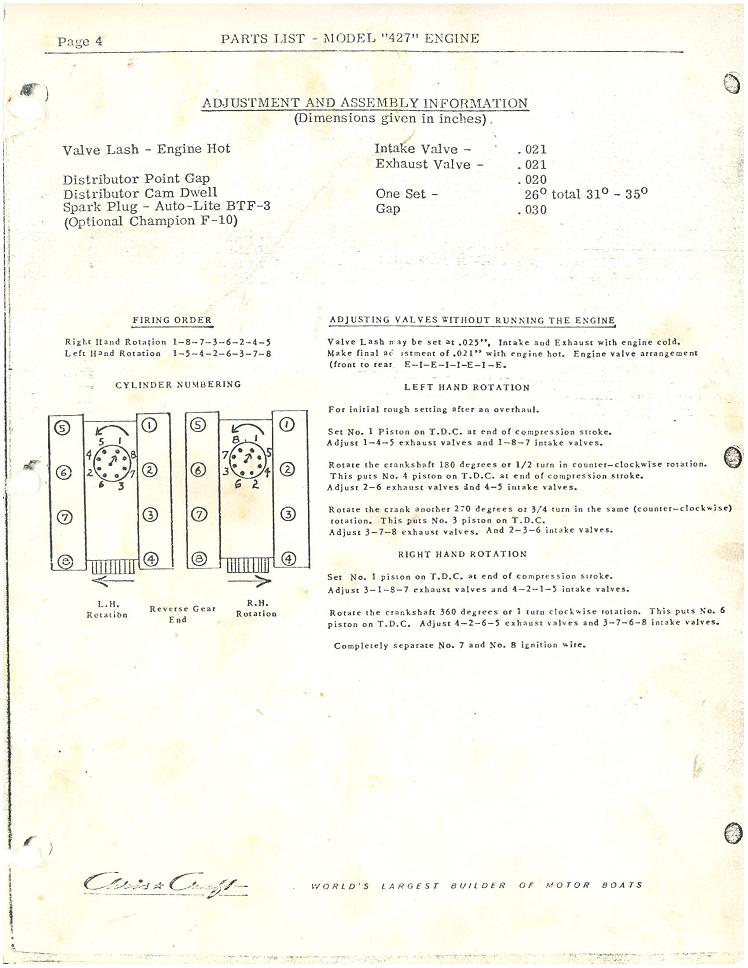
The Chris Craft 427 owners manual requires the valves to be adjusted cold at 025 and 021 hot.

The valve adjustment can be done two ways, in a static mode by manually turning the engine by hand, or by working on a hot motor that is running. I much prefer to check on a hot running motor, and the most difficult thing is taking off the valve cover, so you can see this really is a piece of cake. If you use the static mode, you must be sure and heat the motor up first, to be sure you are getting an accurate .021 reading. I will post the actual sequence upon referencing the manual one more time (this evening).


Some people suggest running the 427 at .025 hot, out of fear that if they get the setting too tight, they will burn the valves. Street driven stock 427 engines require a setting of .025 hot, but their cams are of a higher lift than our boats, and they have a factory imposed redline set at 6,000 rpm, so I would default to the Chris Craft and Ford recommended settings on the MARINE APPLICATION. I prefer to have the settings right on the money, as the motors tend to idle well, not stall, and reach maximum power if they’re set to marine recommended adjustment points.

I check and make adjustments on a static motor, but I also check my valves with the motor running. Warm the engines, remove a valve cover, put towels down to catch any dripping or spatter, and take the .021” feeler gauge and insert it into all the valve lash openings while the motor is running. You’ll be able to tell EXACTLY which ones have a perfect fit, and which ones are a little tight, and which ones are loose. You can mark these for adjustment when the motor is shut off, or you can adjust the valve lash on a running motor if you are able to deal with all of the movement etc.

Here’s how to make adjustments with the motor running:
Obtain a 7/16 offsetbox end wrench (which will stay put while the valves are jumping around). Wrap a thick rag around the wrench to dampen some of the vibration, and while the engine is running turn the adjusting nut until you feel just a little drag on the feeler gauge.

I’ll post additional specs and some photos at a later date, so this post can become a reference worth keeping on board your boat.

Regards, Paul

1966 38’ Commander Express
Original 427 Power
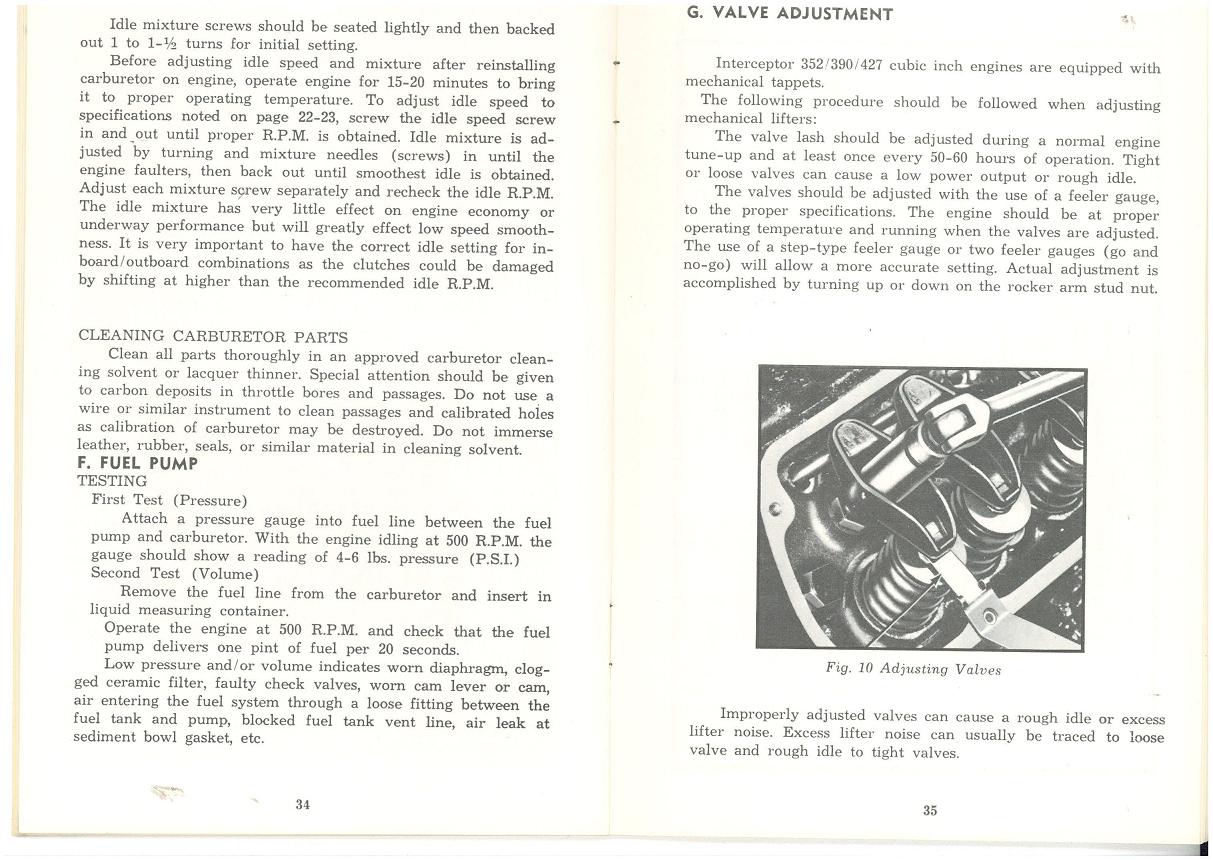


Here is the valve adjustment section from my Eaton Marine Interceptor owners manual, with regqrds to the solid lifter Ford "FE" series motor, of which the 427 Chris Craft is a member.


Here are some great photo documentary related threads:

All about 427 Valve Seals
http://www.network54.com/Forum/424840/message/1165216759/

All about 427 Cylinder Heads
http://www.network54.com/Forum/424840/message/1121461942


This message has been edited by FEfinaticP on May 3, 2007 11:41 AM
This message has been edited by FEfinaticP on Aug 3, 2005 1:07 PM


 Respond to this message   
AuthorReply

P
(Premier Login FEfinaticP)
Forum Owner

CC statement on 427 valve adjustment

August 3 2005, 1:39 PM 


 Respond to this message   

P
(Premier Login FEfinaticP)
Forum Owner

CC 427 valve adjustment sequence (while engine not running)

August 3 2005, 1:40 PM 


This message has been edited by FEfinaticP on Aug 3, 2005 2:13 PM


 Respond to this message   
Paul
(no login)

Importance of proper valve adjustment on a CC 427

September 5 2006, 12:31 PM 


I had an enjoyable telephone call from Howard today, thanks Howard, hope it helps you diagnose your 427. The 427 marine engines can be made to run very well, and also made to be VERY reliable, but it takes a bit of proactive maintenance now and then.

During the conversation we discussed the fact that one valve was making a lot of noise. My take on the conversation was, it could be a sticking solid valve lifter, it could be a broken valve spring, perhaps a cracked rocker, perhaps a hardened valve seat that has come loose and wedged itself to make the clearance very big, or just an improperly set valve.

We're hoping it's the latter.

I had one that was so far off when I bought my boat, the cylinder had zero compression, and after I adjusted it properly the motor ran great, and has continued to run great for ten years!


The 427 solid lifter motor is valve sensitive, and it loves to run well with the valves properly set and it doesn't like to run too well if things get sloppy or tight. Therefore, in order to get the best performance, to stay safe, and to avoid dropping a valve or bending a pushrod, it's darn good practice to check the clearances now and then.


I like checking my valves hot and with the motor running. I'll put down a towel to keep oil from splashing around, but normally there's not much splash at idle. This is generally quick and efficient. I remove the valve cover from a hot motor, and run at idle while I take a flat blade feeler gauge of .021" and gently insert it into the space between rocker tip and top of the valve stem. Those valves that are perfectly set are the ones where the blade slips in and out like butter. The ones that are too tight to accept the blade, need some adjustment. The ones where there is too much slack, need adjustment. I make notes as I check each valve, by number. I then shut off the motor, make fine adjustments accordingly, re-run hot and check em again to perfection. I can't achieve the same level of perfection by doing the static TDC adjustments, becuase the static reading is generally a little different than the reading you get with the motor actually running. I am not recommending you do this, I'm just outlining what I do on my motor, and it works for me!


Regards, Paul


This message has been edited by FEfinaticP on Sep 5, 2006 12:57 PM
This message has been edited by FEfinaticP on Sep 5, 2006 12:55 PM


 Respond to this message   
Bill Rayson
(no login)

Exactly how I check my valves

September 5 2006, 4:20 PM 

Paul, you outlined exactly how I check mine too. It's an efficient way to do it, and it also is the most accurate way to do it I know of.

Regards,

BRayson

PS: Keep up the great work on the web site, I have not posted much, as I've been redirected away from boating, but hopefully only a temporary inconvenience.

 
 Respond to this message   
Paul
(no login)

More info on setting valves, TDC, firing order, etc

April 5 2007, 3:27 PM 

Hi guys,

I've received some very good questions about some of this via email, and rather to respond only via email, I thought it would make a good addition for others to see too.

Therefore I've added some important scans from Steve Christ's book, "How to Rebuild Big-Block Ford Engines", which is a very good resource for anyone running a 427 marine engine to have. It's by HP BOOKS-708


I caution you to please understand this is for the "FE" series Ford big block, for which the 427 marine motor is a family member, but this is specifically for the automotive versions. The marine version has slight deviation, especially on the opposite rotation motor of course, but this remains a very good source of info.

regards, Paul


 Respond to this message   
Paul
(no login)

Valve adjustment technique

April 5 2007, 3:29 PM 


This is similar to how I adjust my valves. I run the engine hot and check things, and record the findings for each valve. Then I shut things off and make the adjustments carefully with the motor off, and restart and measure again. The technique below adjusts valves as the motor is running, and I've found that to be somewhat difficult and prefer my own hybrid method as noted in a previous post on this thread. I offer this "for your information".

regards, Paul


 Respond to this message   
Tom Slayton
(no login)

Thanks Paul, good info

April 6 2007, 7:00 AM 

I really appreciate seeing this info, and the reference to Steve's book, which I am seeking now.

Tom

 
 Respond to this message   
Paul
(no login)

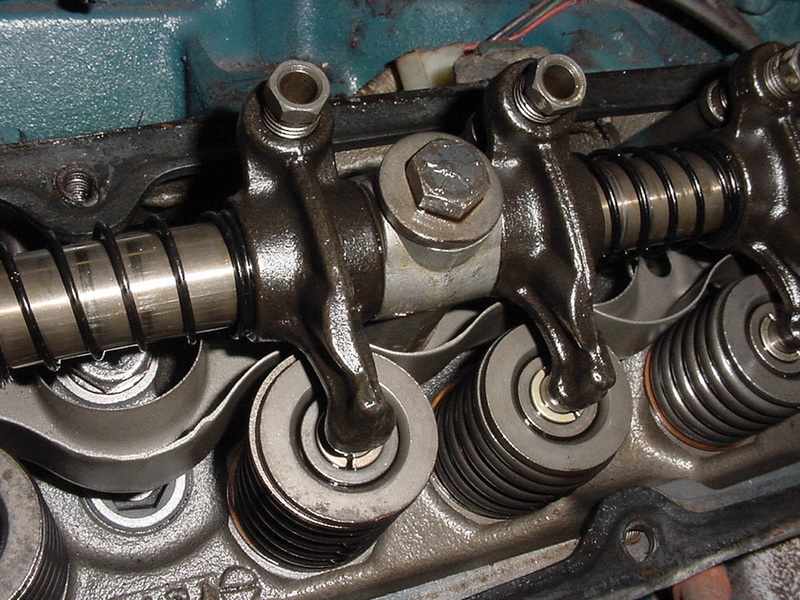
Here's what those bad boys look like ( photo )

April 6 2007, 9:20 AM 


Reliable cast iron rockers running off a rocker arm shaft, solid lifters. Pretty simple and strong.


Paul

 
 Respond to this message   
Mike
(no login)

This is a wonderful resource

March 12 2008, 3:36 PM 

I am more and more impressed with this site every day.

I have run copies of this thread and I will be aboard my boat this weekend getting familiar with the equipment.

Thank you for posting this information.

Mike

 
 Respond to this message   
Current Topic - MARINE 427 VALVE ADJUSTMENT (technique and settings)
  << Previous Topic | Next Topic >>Return to index  

Contact the Chris Craft Commander Forum
chriscraftcommander@hotmail.com

©2005, ©2006, ©2007, ©2008, Chris-Craft Commander Forum, Inc., ®, chriscraftcommander.com. Information and intellectual property on this not-for-profit non-commercial site may be copied for individual personal use, but any other reproduction or use requires written approval. Any entity who mines this site for names, material, or their other commercial/financial benefit in any way is subject to copyright and intellectual property law; the integrity of this site will be aggressively protected. The material here is for indivudual personal use and is not to be sold. Chris Craft is a registered trademark of Chris-Craft. Neither Chris-Craft nor any subsidiaries of Chris-Craft shall bear any responsibility for the chriscraftcommander.com content, comments, or advertising. Chris Craft Commander Forum, Inc., is independent from Chris Craft (and the Chris Craft Commander Club) and is not affiliated with, sponsored or supported by those organizations in any way. Copyright/trademark/sales mark infringements are not intended, or implied. Don't click on the following link unless you want spam, it's a search engine link. AddMe.com, Search Engine Submission and SEO google37b5db87ae53b031.html