I've tested four factory cast iron 4V manifolds on my 428CJ dyno mule. The "S" intake as found on 390 GT cars was the worst performer. Up about 10 HP from the S was the "T" intake, as found on ford pickups. The early low riser 4V cast iron intake, as found on pre-66 FEs, was up about another 10-15 HP from the T. All three of these intakes delivered excellent low end torque, but fell off in power rapidly over 3000 RPM.
The factory cast iron 428CJ intake is head and shoulders above the other cast iron intakes, showing a 25-35 HP advantage over the early low riser 4V intake. This intake delivered almost as much low end torque as the other manifolds, and beat them hands down over 3000 RPM.
The factory aluminum intakes come in a variety of styles. Some are good, like the ones on the 427 medium riser engines and the 428 police interceptor manifolds. Others are not so good, like the ones on the 352 HP engines or early 390 performance engines. The low end aluminum intakes don't offer any performance advantage over the low end cast iron intakes.
The Edelbrock Performer intake offers good low end torque, and poor top end performance, just like some of the low end factory cast iron intakes. The Edelbrock Performer RPM, on the other hand, is an outstanding intake, giving up very little in low end torque, and making more HP than any of the factory single four intakes. The Performer RPM is arguably the best all around FE intake.
Not to be forgotten is the Edelbrock Streetmaster, which gives up very little low end torque for a single plane intake, while making excellent horsepower. If you can get one at a reasonable price ($150 or less), I'd grab it.
Hope that helps - Jay
Jay Brown
1968 Shelby GT 500 Convertible, 492" 667 HP FE
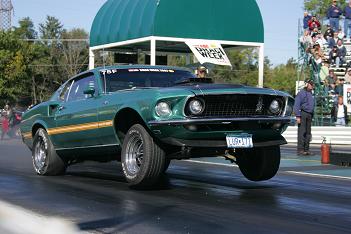
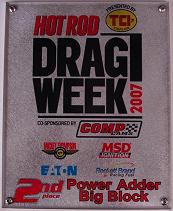
1969 R code Mach 1, 490" supercharged FE, 9.35 @ 151.20, 2007 Drag Week Runner Up, Power Adder Big Block
2005 Ford GT, 2006 Drag Week Winner, 12.0 Daily Driver
1969 Ford Galaxie XL, 460 (Ho Hum....)
1964 Ford Galaxie 500, 510" SOHC